If high electric bills make you think twice about buying new construction in West Oʻahu, Ho'opili may surprise you. Many buyers want a home that feels comfortable day to day, supports a lower-impact lifestyle, and is designed with long-term efficiency in mind. In this guide, you’ll learn how newer Ho'opili communities approach energy-efficient living, what features to look for, and why the bigger community design matters just as much as what is inside the home. Let’s dive in.
Why Ho'opili stands out
Ho'opili was planned as more than a collection of new homes. According to the Ho'opili Community Association, the community is designed around walking, biking, transit access, parks, and mixed uses, with residents intended to be within walking or biking distance of jobs, services, recreation, and two rail stations.
That broader design supports a practical kind of energy-efficient living. Instead of focusing only on appliances or air conditioning, Ho'opili also gives you the option to rely less on driving for some daily needs. The master-plan vision also includes preserved open space and a LEED-ND 2009 framework, which adds another layer to the community’s sustainability story.
D.R. Horton materials also highlight planned shopping and dining, community and recreation spaces, rail access, and more than 200 acres of urban agriculture in Ho'opili. Together, those features create a lifestyle that can feel more connected, more convenient, and more intentional for buyers who value greener living choices.
Energy-saving home features
Newer Ho'opili homes include several features that can help with comfort and efficiency in Hawaiʻi’s warm climate. In the project owner’s 2025 annual report to the State Land Use Commission, homes are described with details like dual-pane insulated low-E windows, radiant barrier roof sheathing, attic and wall insulation, ductless split air-conditioning systems, LED lighting, and solar hot water in single-family homes.
These details matter because cooling costs on Oʻahu can add up quickly. Hawaiian Electric lists Oʻahu residential electricity rates at 40.54 cents per kWh in 2025, so efficient design is not just a nice extra. It can be meaningful for your monthly budget.
Windows and insulation matter
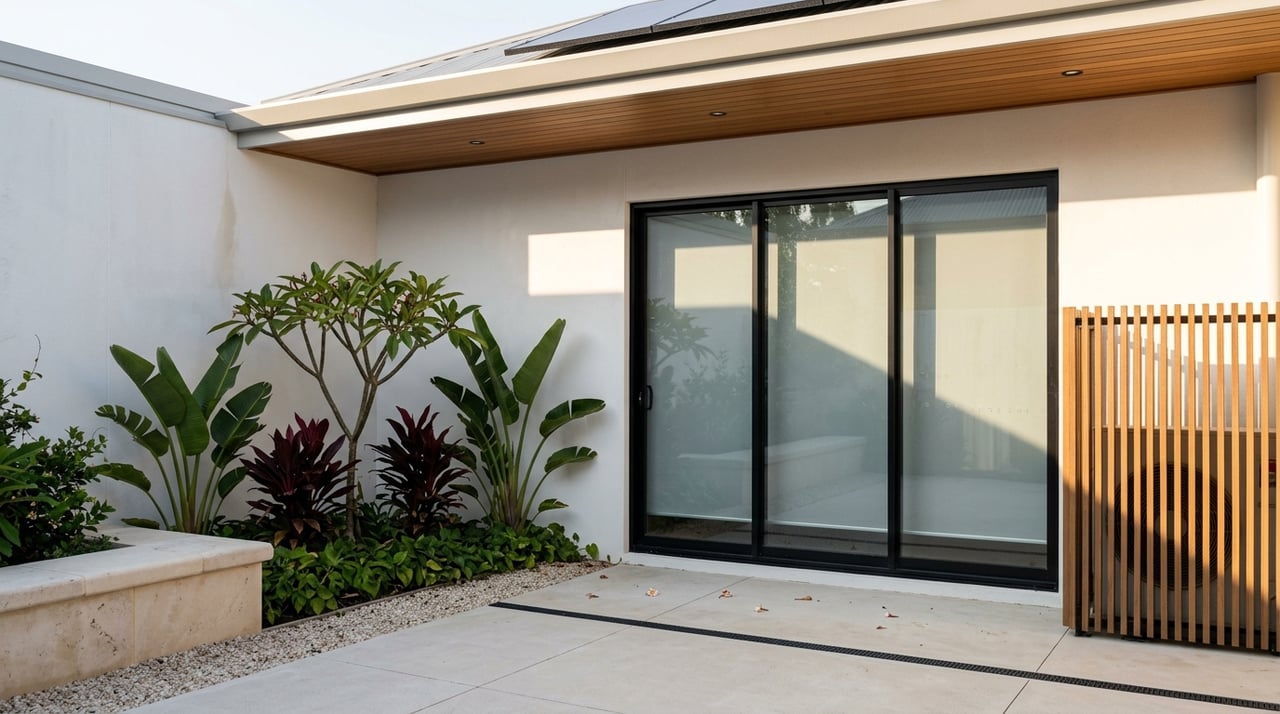
In a warm climate, your home’s outer shell does a lot of the heavy lifting. The Ho'opili report notes low-E windows and sliding doors with a low solar heat gain coefficient, along with R-19 attic insulation, R-13 exterior wall insulation, and radiant barrier roof sheathing.
The U.S. Department of Energy explains that energy-efficient windows with low solar heat gain can reduce heat entering the home in warm climates. DOE also notes that insulation and radiant barriers can help reduce cooling loads, which is especially relevant when you are trying to stay comfortable without overworking your AC.
Cooling systems built for efficiency
The same Ho'opili report says homes use ductless split air-conditioning systems with an average SEER2 of 22.8. For everyday buyers, that translates to a cooling system designed to deliver comfort with less wasted energy than older, less efficient setups.
The report also notes third-party energy-code checks, including pre-drywall insulation inspections and blower-door testing. That kind of verification can give you added confidence that the performance features are not just listed on paper.
Everyday features you will actually notice
Some efficiency upgrades are easy to overlook during a showing, but they can affect your daily living right away. Ho'opili’s reporting also mentions 100% LED lighting, solar hot water for all single-family homes, and smart-home systems that can manage irrigation, lighting, and air conditioning.
For you, that can mean a home that is easier to run, easier to monitor, and potentially less expensive to operate over time. These are the kinds of features that can make a difference long after move-in day.
Solar-ready versus solar-installed
One of the most important details for buyers to understand is the difference between PV-ready and solar-installed. They are not the same thing.
According to the 2025 Ho'opili annual report, single-family homes have 100% PV-ready infrastructure and 100% EV infrastructure. The same report says nearly half of completed single-family homes had installed PV systems by August 2025.
That means some homes are prepared for solar, but not all homes already have solar panels in place. If energy efficiency is a top priority for you, it is worth asking exactly what is included in the specific home, lot, or phase you are considering.
EV and future-ready living
For buyers thinking ahead, EV support is another notable feature in Ho'opili. The same state report says single-family homes include EV infrastructure, and multi-family garages and common stalls also include EV infrastructure.
If you already drive an electric vehicle, or think you may in the future, this can make daily life more convenient. It also reflects how newer communities are adapting to changing transportation needs over time.
Sustainability beyond the house
A truly energy-conscious lifestyle is not only about what happens inside your walls. Ho'opili also builds sustainability into the wider community through landscaping, irrigation, and neighborhood design.
The project reporting says edible landscaping is used in single-family and multi-family areas, and some parking areas are designed to drain into landscaped areas. It also notes that landscape irrigation uses weather-based WaterSense controls, which can support smarter water use.
D.R. Horton also describes Ho'opili’s Grown in Ho'opili program as using edible and usable landscaping and urban gardens instead of only decorative plantings. That creates a more practical, place-based approach to outdoor spaces and helps tell a bigger story about how the community was planned.
Walkability, rail, and transportation
Transportation choices are part of the energy conversation too. The Ho'opili Community Association highlights bike and walking paths, rail stations, and commercial spaces within the community.
When a neighborhood is designed so you may be able to walk, bike, or use transit for some errands or commutes, that can support lower transportation-related energy use. For many buyers, that kind of access adds convenience as well as long-term lifestyle value.
What buyers should ask
Because features can vary by home type, builder, or phase, it helps to ask direct questions before you buy. The research shows these features should be treated as community-specific and plan-specific, not assumed to be identical in every Ho'opili home.
Here are a few smart questions to bring with you:
- Is this home PV-ready, solar-installed, or both?
- What type of cooling system is included?
- Does the property include solar hot water?
- What insulation and window features are part of this specific home?
- Is EV infrastructure already installed?
- What smart-home systems are included?
- Are there any upgrade options or completed add-ons already in place?
These questions can help you compare homes more clearly and avoid assumptions based on model-home marketing alone.
Incentives worth knowing about
If you are thinking about adding or upgrading energy features after purchase, current programs may be helpful. Hawaiian Electric says its Bring Your Own Device Plus program became available on May 15, 2025 and offers an upfront incentive of $400 per kW committed, plus monthly export credits, for batteries paired with renewable generation.
Hawaiʻi Energy also notes that its 2025-2026 rebate cycle runs through June 30, 2026 and includes residential rebates for solar water heaters, heat pump water heaters, ENERGY STAR appliances, and cooling upgrades for Oʻahu ratepayers. Program details can change, so it is always wise to confirm current eligibility and requirements as you plan improvements.
Why expert guidance helps
When you are comparing new construction, efficiency is easy to oversimplify. A home can be marketed as green, smart, or solar-ready, but the real value comes from understanding what is actually installed, how the home is designed to perform, and how that fits your goals and budget.
That is where working with an agent who understands sustainability in real estate can make a difference. Tia Perez holds the NAR GREEN designation, which is designed for agents who want to deepen their knowledge of energy efficiency and sustainability in real estate.
If you want help comparing Ho'opili homes, understanding feature packages, or finding a property that supports your lifestyle in West Oʻahu, connect with Tia Perez. You’ll get warm, knowledgeable guidance with the local insight to help you make a confident move.
FAQs
What makes newer Ho'opili homes energy-efficient?
- Newer Ho'opili homes may include features such as low-E dual-pane windows, insulation, radiant barrier roof sheathing, ductless split AC systems, LED lighting, solar hot water for single-family homes, and smart-home controls, according to the project’s 2025 annual report.
Is PV-ready the same as having solar panels installed in Ho'opili?
- No. PV-ready means the home has infrastructure prepared for solar, while solar-installed means panels are already in place. Ho'opili’s report makes that distinction clear.
Why do windows and insulation matter in Ho'opili homes?
- In Hawaiʻi’s warm climate, efficient windows, insulation, and radiant barriers can help reduce heat gain and cooling demand, which may help with comfort and energy use.
Do all Ho'opili homes have the same energy-efficient features?
- No. Features can vary by home type, builder, and phase, so you should confirm the exact package for the specific property you are considering.
Are there EV-friendly features in new Ho'opili communities?
- Yes. The project report says single-family homes include EV infrastructure, and multi-family garages and common stalls also include EV infrastructure.
Are there rebates or incentive programs for energy upgrades on Oʻahu?
- Yes. Hawaiian Electric’s BYOD Plus program and Hawaiʻi Energy’s 2025-2026 rebate offerings may provide support for certain solar, battery, water heating, appliance, and cooling improvements.